


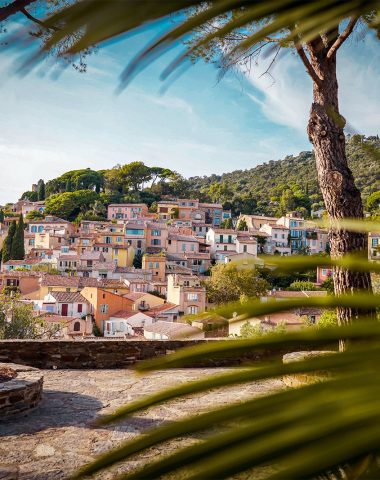







As you approach the medieval village of Bormes-les-Mimosas, you won't be able to resist the allure of the sea. Classified as one of the Most Beautiful Bays in the World , the Bormes coastline is simply dotted with magnificent, expansive beaches of fine sand . They rival the most beautiful shores in the world. In winter, spring, autumn, or summer, discover horizons with surreal colors worthy of masterpieces and feel the softest sands beneath your feet!
The beaches of Bormes les Mimosas
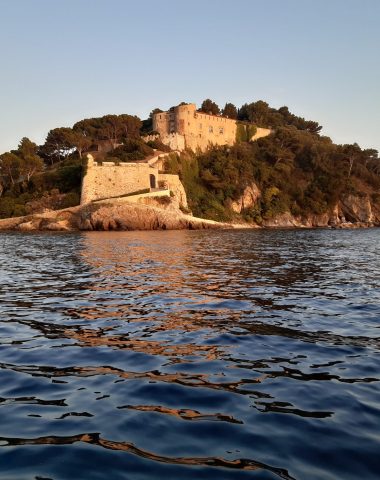
The Bormes-les-Mimosas coastline stretches from Gouron beach to La Londe-les-Maures , passing by Cap Bénat , and offers a great diversity of landscapes: golden sandy beaches, coves, and renowned beaches such as Brégançon, Cabasson, L'Estagnol, Léoube, and Pellegrin. The colors and textures of the sand vary along the coast, ranging from off-white to gray, from powdery to very granular. The bay offers unique atmospheres and superb views of the Hyères harbor, the Îles d'Or (Golden Islands), and Fort de Brégançon . Some beaches, accessible only on foot via the coastal path, invite you to discover this unspoiled coastline.

- For families and sports enthusiasts: the Favière beach, easily accessible with many activities, water sports, sports facilities, restaurants and shops nearby.
- For a swim with a view of Fort Brégançon: Brégançon beach with its fishermen's huts and the Cabasson beachKitesurfing is permitted on this beach during the low season.
- For a heavenly atmosphere: the Estagnol beach With its turquoise waters and fine sand: a real postcard!
- For a more intimate moment: the Pellegrin beach, with beach lounge and restaurant, paddleboard and kayak rentals, sunbathing areas and seasonal events…
- For a beach accessible to all: Cabasson beach and Favière beach are equipped with a PMR mat and tiralos in the summer season.
-

Cabasson Beach -

Gouron Beach -
-
Photo 1 -
Photo 2
-
-
-
Estagnol Beach -
Estagnol Beach -
Estagnol Beach -
Estagnol Beach
-
-
-
Photo 1 -
Photo 2 -
Photo 3 -
accessible mat
-
-
-
Brégançon beach -
Brégançon beach
-


Our four-legged friends are welcome on the beaches of Brégançon and Gouron all year round! 🐾


If you love adventure and wilder beaches, head out for a hike along the coastal path . The beaches and landscapes you'll discover are well worth the detour! Explore Vignasse Beach, La Mère Dieu Beach, Grand Jardin Beach, and the many small, interconnected coves. For example, you can join the path leading to the beaches of Bormes from Favière Beach, Cabasson Beach, or conversely, from Argentière Beach in the neighboring town of La Londe. The different orientations of these beaches offer a variety of diverse viewpoints . Admire the Hyères harbor and its Îles d'Or (Golden Islands ), or the Fort de Brégançon: jewels of the Var coast.


The diversity of the beaches of Bormes les Mimosas
No less than 17 kilometers of sand await you! Indeed, the Bormes coast boasts a wide variety of beaches. From large stretches of sand near shops, like the vast Favière beach , to small, wild, and secluded coves near Cabasson , there's something for everyone.
💡 Our tips for a successful swim
- To avoid peak times on our beaches and in the car parks, choose early morning or late afternoon.
- Vary the pleasures: Park at the Cabasson beach car park to reach our beaches on foot via the coastal path.
- Please note Hiking and all access to the mountains and coastline (except for beaches) may be prohibited if the area presents a fire risk. Please check the dedicated card.
A common thread from beach to beach
The coastal path
These beautiful beaches of Bormes les Mimosas with fine sand, which follow one another, are linked together by a path that runs along the coast along the sand and rocks: the coastal path.

You can therefore take this path from the port of La Favière , heading towards Cap Bénat. You'll follow the coastline and enjoy breathtaking views of the Bay of Bormes, while walking on the sand of smaller, less well-known, and more secluded beaches, as they are more difficult to access. Winding through coves and inlets, the path will lead you to Cap Blanc , at the southernmost tip of the town, where you will need to retrace your steps.
On the other side, starting from Fort de Brégançon , following the path also allows you to discover all the other beaches of Bormes-les-Mimosas . From Brégançon beach, passing by La Vignasse beach and going all the way to Pellegrin beach, enjoy an abundance of beaches along 8 kilometers!
Beach safety and surveillance
Throughout the summer season, lifeguards, along with maritime authorities and Port Cros National Park rangers , are on duty. Naturally, everyone's safety is paramount on our beaches. That's why the town of Bormes-les-Mimosas is implementing increased surveillance on La Favière beach and Cabasson beach . The first aid stations on both beaches have a total of seven lifeguards, easily recognizable by their fluorescent yellow t-shirts and red shorts!

Throughout the year, samples are taken and analyzed along the Bormes coastline to ensure continuous monitoring of the health of the marine environment and the quality of bathing waters. In addition, the Var nautical brigade and the SNSM (French Sea Rescue Society) maintain a year-round maritime presence.
Jellyfish are present throughout the year, at certain times of the year. Throughout the summer season, lifeguards, maritime authorities, and Port Cros National Park rangers are on the lookout. Refer to the information boards at the beach entrances for more details, and you can also consult this website which lists the presence or absence of jellyfish.
Beach management
For several years, the town of Bormes-les-Mimosas has been committed to a sustainable approach to beach management , participating in the preservation of Posidonia seagrass meadows , which are essential for combating coastal erosion and preserving the biodiversity of these sites. The municipality has signed the "For Characterful Beaches in the Mediterranean" charter to maintain these natural seagrass beds.


Posidonia
The many small "algae" you see on the shore are actually dying seagrasses that rise to the surface and wash up on the beach. Their presence is a natural and age-old process, essential for maintaining the beach as it helps prevent erosion. These plants (not algae) are called " Posidonia ," and their meadows, found on the seabed throughout the Mediterranean , are vital for preserving marine life because they provide habitats and a food source for numerous species. Posidonia is our friend!
Learn more about our beaches


Restaurants by the beach
Restaurant

Chez Pat et Gene Restaurant l’Estagnol
Restaurant

Restaurant

Restaurant

Restaurant

Seaside accommodations


3 stars

2-star Furnished Accommodation and Cottage

Furnished rental and holiday cottage

Furnished rental and holiday cottage


