









The Chemin des Sages project was born during a meeting of the Council of Elders, composed of 9 women and 9 men aged 60 and over, chosen for their wise experience by the municipal councilors. On that day, the topic of discussion was how to bring our republican motto, "Liberty, Equality, Fraternity," to life.
The birth of the Path of the Sages
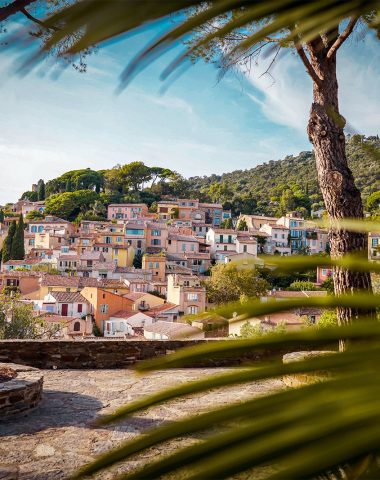
The idea arose that scattering quotes from illustrious men and women , renowned worldwide for their wisdom and humanism , throughout the town could resonate with both locals and tourists. To justify this bold and innovative project to the Mayor and the Town Council, the decision was made to link this route to the historical plaques that were to be installed on the town's iconic monuments. The members of the Council of Elders then determined the path through the medieval village and worked on the materials, texts, images, and symbols for these plaques.

The butterfly symbol was chosen because it represents joy, beauty, grace, and the lightness of being. It evokes the power of personal transformation through its strong capacity for rebirth. Indeed, before becoming a butterfly, this insect is first an egg, then a caterpillar, then a chrysalis, and finally a butterfly. Each new stage symbolizes a change in life, letting go of who you were to appreciate who you have become. As a symbol of wisdom, this animal is a source of inspiration in life. Beneath its fragile appearance,
The butterfly possesses great strength. Indeed, its life is ephemeral (lasting from a few days to a few weeks), and yet it spreads joy and good cheer through the grace and beauty of its flight, appreciating every moment that nature offers. So why not be like the butterfly, approaching with confidence everything that life offers us , good or bad experiences, because after all, it only lasts a moment? Aren't these past experiences the best preparation for the future , allowing us to move forward with greater serenity on life's path?
Condorcet's biography
Philosopher of the Enlightenment, mathematician, economist, editor of the "Encyclopédie", French politician, pioneer of the admission of women to the right of citizenship.
Nicolas de Condorcet, French mathematician, philosopher, politician, and publisher, a leading figure of the Enlightenment , was born on September 17, 1743, in Ribemont (Aisne) and died on March 29, 1794, in Bourg-la-Reine. His insatiable curiosity led him to take an interest in philosophy and politics. He contributed to the Encyclopédie, defended human rights, and opposed slavery. In 1777, he was appointed secretary of the Academy of Sciences, and in 1782, secretary of the French Academy.

A key figure in the French Revolution, he hoped it would lead to the rationalist reconstruction of society. Elected to the Paris municipal council and representing Paris in the Legislative Assembly in 1791, he sat with the Girondins . On April 20 and 21, 1792, Condorcet presented a report and a draft decree on the general organization of public education to the Assembly. However, this presentation, taking place on the very day of France's declaration of war against the "King of Bohemia and Hungary," had no effect. The highly innovative ideas of free, compulsory, secular, and universal education that he championed would not be implemented until a century later.
Condorcet actively defended women's rights , particularly the right to vote. His independent thinking earned him powerful enemies. When the Girondins lost control of the Assembly, he criticized their proposed new Constitution. Convicted of treason, he went into hiding at Madame Vernet's home in Paris. This five-month reprieve allowed Condorcet to write "Sketch for a Historical Picture of the Progress of the Human Mind," a work that foreshadowed Auguste Comte 's theories on positivism . No longer feeling safe in Paris, he attempted to flee, but was arrested on March 27 in Clamart. He is believed to have committed suicide two days later in his cell to avoid the guillotine.
For the historian Jules Michelet (1798-1874), Condorcet is the "last of the philosophers" of the 18th century. Authentic spirit of the " Lights“Condorcet displays a confident rationalism in the capacities of man to progress and believes that progress cannot be implemented without priority being given to general education, hence his thoughts, well ahead of his time, on the creation of a public, secular and free school.
The clock tower
The "Clock Tower," located in the village rampart, was built in 1789 as a square tower to house a clock. The tower had to be tall enough so that the sound of the bell striking the hours and half-hours could be heard from a distance, especially by workers in the cultivated fields on the plain below the village. It also served as a warning to the population in case of danger, such as a fire in the hills.


At that time, the village ramparts were already in poor condition; some sections had been destroyed, including those near the recently built Saint-Trophyme church (1783). It is likely that the stones from the ruined ramparts were reused in the construction of new buildings, perhaps even for the Clock Tower. The clock was made by Pierre Jobert of Méoune and cost 900 francs. At the time, it was the only striking clock in the village.
The bell in the Clock Tower bears the date 1553 and a Latin motto that translates as "Great Wisdom and Judgment of God, Have mercy on us." It also features bas-reliefs depicting the Virgin and Child, a crucifix, and Saint Michael. It measures 0,61 m in diameter, 0,64 m in height, and weighs 148 kg. It rings the note D. The tower's exterior staircases were designed in a spiral with unmortared stonework and a fan shape. The door on Rue Carnot opens into a room that was long used as a fish shop . The interior of the tower is almost empty, except for a narrow staircase.
A spiral staircase leads to a platform. The upper room benefits from light through a north-facing window. An opening provides access to the top of the tower for maintenance work when necessary. The tower was painted by Maurice Utrillo in 1937. Serpentine stones from the La Mole quarry surround the door on Rue Carnot, indicating the wealth or high social standing of the house's occupants. This location was long used as a rest house by the Carthusian monks of La Verne when they were passing through the village, due to its proximity to places of worship.

Also find the Path of the Sages on Baludik!
To discover the fun and geolocated route, scan this QR code. Games and surprises await you with the Baludik application.