









The Chemin des Sages project was born during a meeting of the Council of Elders, composed of 9 women and 9 men aged 60 and over, chosen for their wise experience by the municipal councilors. On that day, the topic of discussion was how to bring our republican motto, "Liberty, Equality, Fraternity," to life.
The birth of the Path of the Sages
The idea arose that scattering quotes from illustrious men and women , renowned worldwide for their wisdom and humanism , throughout the town could resonate with both locals and tourists. To justify this bold and innovative project to the Mayor and the Town Council, the decision was made to link this route to the historical plaques that were to be installed on the town's iconic monuments. The members of the Council of Elders then determined the path through the medieval village and worked on the materials, texts, images, and symbols for these plaques.

The butterfly symbol was chosen because it represents joy, beauty, grace, and the lightness of being. It evokes the power of personal transformation through its strong capacity for rebirth. Indeed, before becoming a butterfly, this insect is first an egg, then a caterpillar, then a chrysalis, and finally a butterfly. Each new stage symbolizes a change in life, letting go of who you were to appreciate who you have become. As a symbol of wisdom, this animal is a source of inspiration in life. Beneath its fragile appearance,
The butterfly possesses great strength. Indeed, its life is ephemeral (lasting from a few days to a few weeks), and yet it spreads joy and good cheer through the grace and beauty of its flight, appreciating every moment that nature offers. So why not be like the butterfly, approaching with confidence everything that life offers us , good or bad experiences, because after all, it only lasts a moment? Aren't these past experiences the best preparation for the future , allowing us to move forward with greater serenity on life's path?
Leonardo da Vinci's biography
Engineer, inventor, painter and sculptor, universal genius.
Leonardo da Vinci, born in Vinci on April 15, 1452, and died in Amboise on May 2, 1519, was a Florentine painter and a man of universal genius, an artist, scientist, engineer, inventor, anatomist, painter, sculptor, architect, urban planner, botanist, musician, poet, philosopher, and writer . After his childhood in Vinci, Leonardo studied under the renowned Florentine painter and sculptor Andrea del Verrocchio. His first important works were created in the service of Duke Ludovico Sforza in Milan. He then worked in Rome, Bologna, and Venice , and spent the last years of his life in France at the invitation of King Francis I.
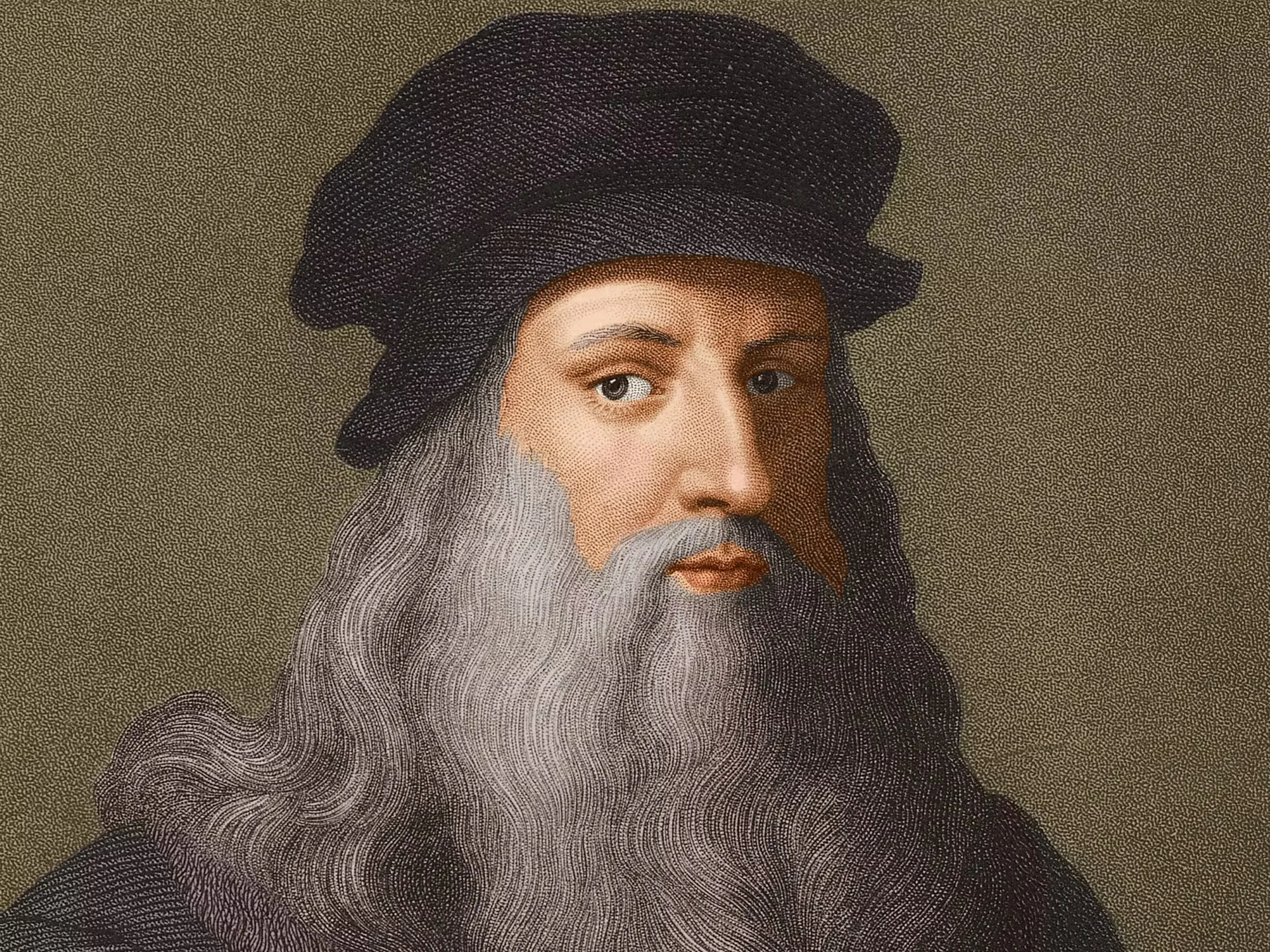
Leonardo da Vinci is often described as the archetype and symbol of the Renaissance man, a universal genius, a humanist philosopher, observer and experimenter, with a "rare gift for spatial intuition," and whose boundless curiosity is matched only by his inventive power.
Leonardo da Vinci is primarily known as a painter . Two of his works, the "Mona Lisa" and "The Last Supper," are very famous paintings , often copied and parodied, and his drawing of the "Vitruvian Man" has also been reproduced in numerous derivative works. Only about fifteen of his paintings have survived . This small number is due to his constant and sometimes disastrous experimentation with new techniques and his chronic procrastination. Nevertheless, these few works, along with his notebooks containing drawings, scientific diagrams, and reflections on the nature of painting, are a legacy to subsequent generations of artists , many of whom consider him second only to Michelangelo.
As an engineer and inventor, Leonardo developed ideas far ahead of his time, such as the airplane, the helicopter, the submarine, and even the automobile. Very few of his projects were realized or even feasible during his lifetime, but some of his smaller inventions, like a machine for measuring the elastic limit of a cable, found their way into the manufacturing world. As a scientist, Leonardo da Vinci greatly advanced knowledge in the fields of anatomy, civil engineering, optics, and hydrodynamics.
The flour mill
Le windmill from the Saint Francis Square is one of the last witnesses of the industrial heritage of village. Bormes is a rural village here mainly depends on agriculture and which was formerly organized into lordship. The inhabitants cultivated early vegetables such as beans, cabbage and chickpeas, and various fruits in orchards located among the vineyards. The in the forest was also exploited for hunting and wood, welcoming in particular charcoal burners and cork lifters. The olive tree was predominant in the landscape and the olive harvests were used in the many oil mills in the area. Some plots were sown with wheat or barley and the bread had a central place in the diet of the agricultural population.
Local lords initiated the construction of windmills and watermills for oil and flour production. The windmills of Bormes were built according to the same plan, with load-bearing walls measuring 6 meters in diameter and height. Above this, a wooden structure , often made of oak and covered by a roof, housed a robust and efficient mechanism. This mechanism transmitted the wind's energy to two millstones located beneath the roof, in the miller's workshop. The flour was collected at the mill's lower level. The miller had to be an experienced technician with a deep knowledge of local winds. He had to master the delicate adjustments of the mill's equipment and fine-tune the millstones to produce the best quality flour without disrupting the farmers' work.
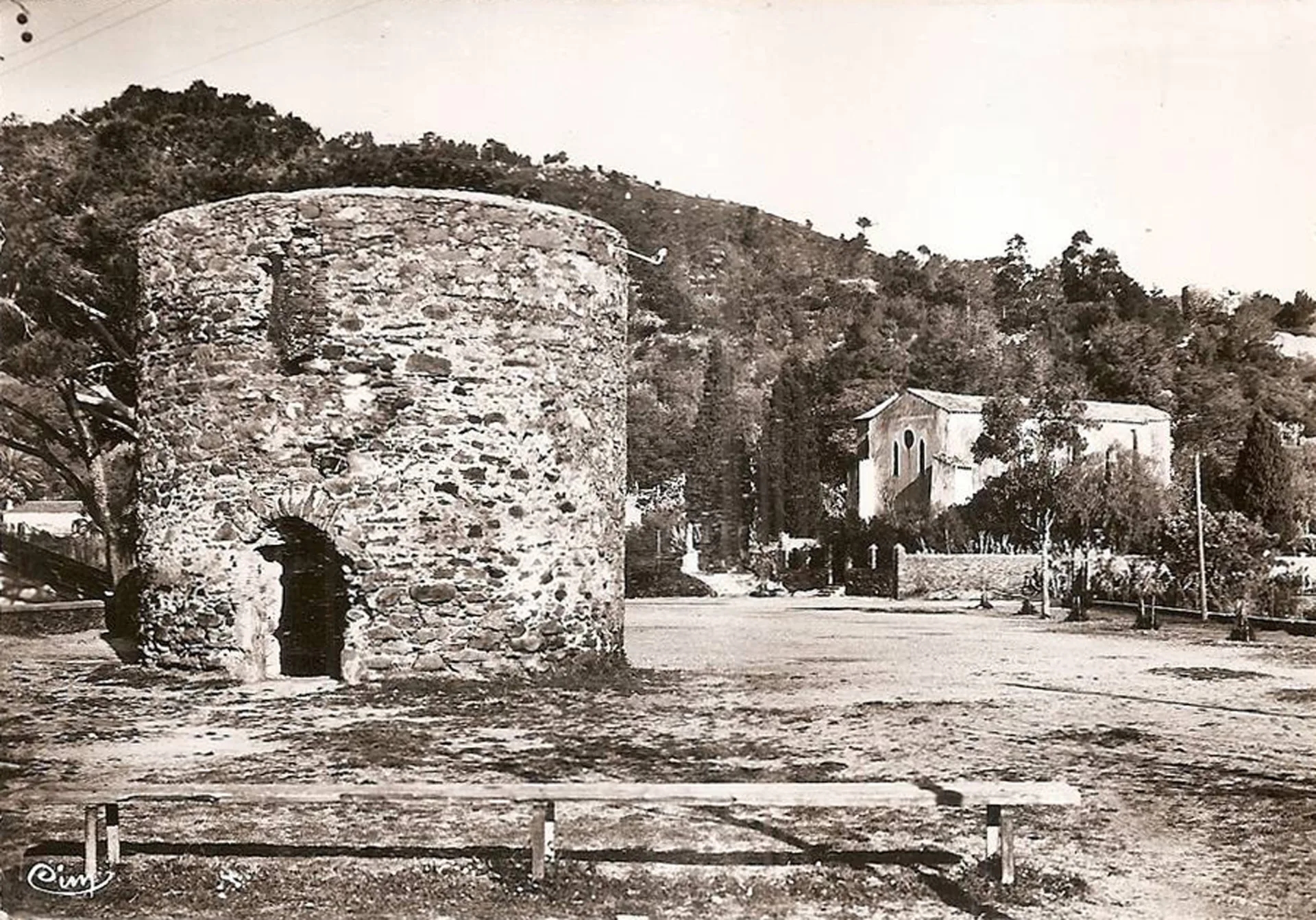
The windmills' location was strategic. They were positioned on ridges to capture winds from all directions and rotate the mill as often as possible, depending on the weather conditions. To optimize their position and seek out air currents, the windmills' roofs were movable. From inside, the miller could adjust the sails in the right direction using a wedge, without leaving the first-floor workshop.
The Industrial Revolution eventually rendered windmills obsolete. Steam mills began to be used , which could operate day and night with optimal efficiency, independent of wind or water conditions. The mill in Place Saint-François was almost abandoned at the beginning of the 19th century, after having been in operation for nearly two centuries. The last miller, Mr. Trophime Celeron Reymonencq , was buried in the old cemetery of the Saint-François chapel, a few dozen meters from the mill. On March 19, 1913, the mill was sold to the municipality in its current state by Mrs. Marie Théophile Michel, a former cork worker, for the sum of 400 francs. Since then, it has stood in Place Saint-François, waiting for kind-hearted individuals to restore its sails.

Also find the Path of the Sages on Baludik!
To discover the fun and geolocated route, scan this QR code. Games and surprises await you with the Baludik application.