











The Chemin des Sages project was born during a meeting of the Council of Elders, composed of 9 women and 9 men aged 60 and over, chosen for their wise experience by the municipal councilors. On that day, the topic of discussion was how to bring our republican motto, "Liberty, Equality, Fraternity," to life.
The birth of the Path of the Sages
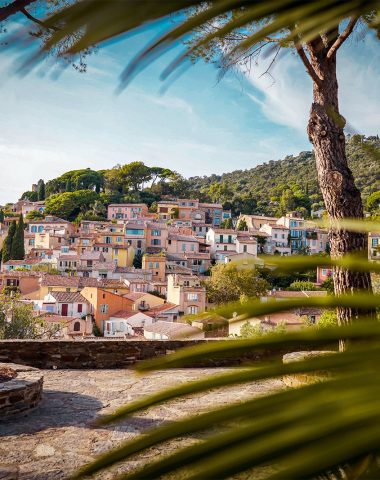
The idea arose that scattering quotes from illustrious men and women , renowned worldwide for their wisdom and humanism , throughout the town could resonate with both locals and tourists. To justify this bold and innovative project to the Mayor and the Town Council, the decision was made to link this route to the historical plaques that were to be installed on the town's iconic monuments. The members of the Council of Elders then determined the path through the medieval village and worked on the materials, texts, images, and symbols for these plaques.

The butterfly symbol was chosen because it represents joy, beauty, grace, and the lightness of being. It evokes the power of personal transformation through its strong capacity for rebirth. Indeed, before becoming a butterfly, this insect is first an egg, then a caterpillar, then a chrysalis, and finally a butterfly. Each new stage symbolizes a change in life, letting go of who you were to appreciate who you have become. As a symbol of wisdom, this animal is a source of inspiration in life. Beneath its fragile appearance,
The butterfly possesses great strength. Indeed, its life is ephemeral (lasting from a few days to a few weeks), and yet it spreads joy and good cheer through the grace and beauty of its flight, appreciating every moment that nature offers. So why not be like the butterfly, approaching with confidence everything that life offers us , good or bad experiences, because after all, it only lasts a moment? Aren't these past experiences the best preparation for the future , allowing us to move forward with greater serenity on life's path?
Gandhi's Biography
Religious apostle and Indian "Father of the Nation": passive resistance and non-violence.
Mohandas Karamchand Gandhi was born on October 2, 1869, in Porbandar, India, into a relatively wealthy and deeply religious family. Hindu values and tolerance shaped Gandhi's moral convictions. In accordance with the customs of his caste, his family married him at the age of 14 to Kasturbai, who would remain his wife for life. As he grew older, Gandhi became convinced that he could only achieve something by breaking with Indian customs and adopting the English way of life. Therefore, in 1888, he left his wife and child for England to study law.
Trained as a lawyer, Gandhi practiced for 20 years in South Africa, where he defended the many Indian immigrants against segregation. During this period, he experimented with passive and non-violent resistance against the authorities. It was on this foundation that Gandhi developed original methods of action, centered around two main principles: non -violence and non-cooperation, including commercial and administrative boycotts. In 1909, he published "Hind Swaraj," a book in which he elaborated on the theories of non-violent struggle: satyagraha. Returning to India in 1915, Gandhi did not separate the political struggle from the social struggle, which he nevertheless emphasized, but he alternated periods of activism between these two forms of protest.
with long periods of retreat, which even disconcerted his colleagues. He committed himself to the struggle against British rule and became the moral authority of the Congress Party. On April 6, 1919, to impress the British, Gandhi called on the people to demonstrate publicly throughout the country and cease all activity. The demonstration was a huge success. On April 13, in Amritsar, the population demonstrated again despite the ban. General Dyer then ordered his men to fire on the peaceful crowd. The toll was appalling: more than 300 dead and more than 1000 wounded. Horrified, Gandhi immediately suspended the satyagraha, to remain true to his ethic of non-violence.

His attachment to traditions, his life of poverty , and his numerous imprisonments earned him great popularity. From 1930 onward, he mobilized Indians in civil disobedience and launched a new campaign, the Salt March against the British monopoly. For 24 days and over 350 kilometers, the procession steadily grew. Upon reaching his destination, Gandhi picked up a handful of salt and announced the start of civil disobedience. He was arrested again. In the 1937 elections, the Congress Party won a landslide victory in the Indian parliament. From then on, the march toward autonomy and independence seemed inevitable.
When World War II broke out in 1939, Gandhi refused to side with the British. He asserted that only an independent India could contribute to the fight against the Nazis. In 1942, he even launched his famous slogan, "Quit India." He urged the British to leave as quickly as possible and reignited the civil disobedience movement. He and the leaders of the Congress Party were arrested after riots broke out. His wife, Kasturbai, died during his imprisonment. In 1944, Churchill secured his release . Independence became inevitable after the war, but so did the partition between Hindus and Muslims. He played a major role in achieving independence in 1947, but the partition between India and Pakistan was a personal failure for him. He was assassinated on January 30, 1948, by a Hindu fanatic in Delhi. "Hey Ram" (Oh God!) were the last words of the Father of the Nation. His death provoked international grief. In Delhi, more than two million Indians will attend his state funeral. Even though he was unable to radically change Indian attitudes as he had hoped, his message of non-violence and passive resistance has had an immense impact.
One of the five oil mills
The olive oil mill on Rue des Contours is an example of a traditional Provençal olive oil mill . Known as a "chapel press," it has unique features that distinguish it from other olive oil mills in the region. Instead of using a central screw, this mill uses a chapel-shaped device to extract the oil from the olives. The mill's structure is designed to resemble a chapel, with a nave, a transept, and a semicircular chancel. The transept houses what is called the "mastre" or "bench," which has a threaded hole for a screw. The screw, which has a head, exerts pressure on a wooden platform guided by two wooden uprights in the nave. This pressure is distributed across stacks of scourtins, coconut fiber baskets filled with olive paste.
This olive oil mill in Bormes was commissioned in August 1808 and operated for nearly a century. It was one of five olive oil mills in the village and received locally grown olives, transported by donkey. Its strategic location, near the main access road to the cultivated areas, as well as the availability of water in the region, contributed to choosing this site for the mill. Despite ceasing operations at the beginning of the 20th century, this olive oil mill in Bormes remains a preserved example of the age-old tradition of olive oil production in Provence.

Also find the Path of the Sages on Baludik!
To discover the fun and geolocated route, scan this QR code. Games and surprises await you with the Baludik application.